Effective Content Creation Strategies for Increasing Brand Awareness Online
Brand awareness doesn't happen by accident. It's built — piece by piece, post by post, channel by channel — through a deliberate content strategy that puts the right message in front of the right people at the right time. The businesses that show up consistently online aren't just posting more. They're posting smarter.
Here's what actually works.
What Is Brand Awareness and Why Does Content Drive It?
Brand awareness is how well your target audience recognizes and remembers your business. It's the difference between being the first name someone thinks of when they need what you offer and being invisible.
Content creation is the most scalable way to build that recognition. When your content is consistent, valuable, and visible across multiple channels, it compounds over time. Every blog post, social caption, email, and video is a touchpoint that either reinforces your brand — or misses the opportunity.
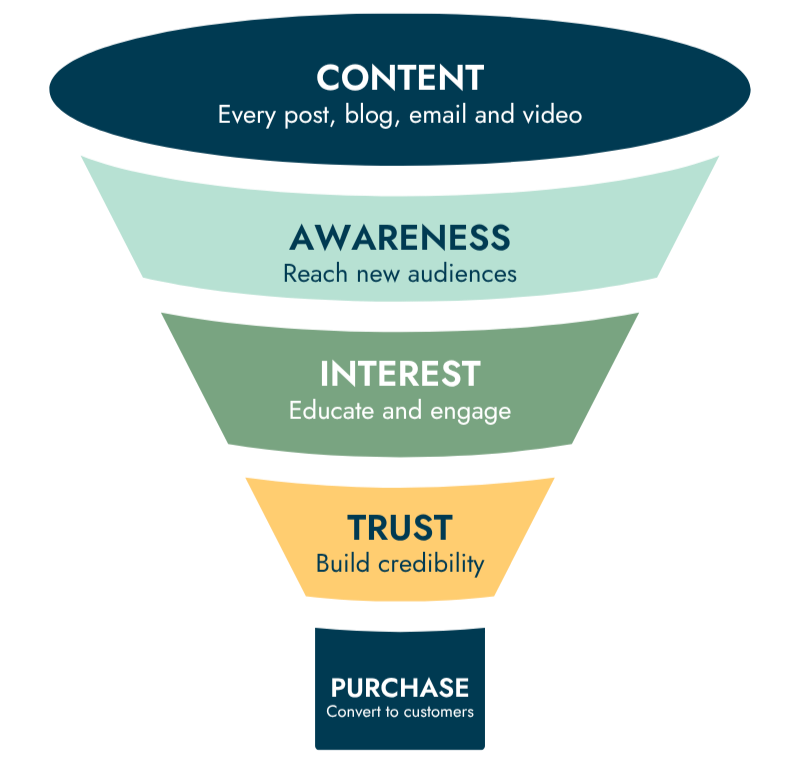
Content marketing funnel showing how brand awareness leads to interest, trust, and purchase — The Winfield Creative
1. Lead with a Clear Brand Voice and Visual Identity
Before any strategy can work, your brand needs to be recognizable. That means consistent fonts, colors, tone, and messaging across every platform.
When someone sees your content in a feed — without your name attached — they should still know it's you. That level of brand recognition doesn't come from posting frequently. It comes from posting cohesively.
What to implement:
Define 3–5 brand content pillars (topics your brand always talks about)
Create a simple brand style guide for your team or freelancers
Apply the same visual treatment across Instagram, LinkedIn, your website, and email
2. Prioritize Consistency Over Volume
One of the biggest myths in content marketing is that more content equals more awareness. In reality, inconsistency is one of the fastest ways to lose audience trust and algorithm favor.
A brand that shows up three times a week, every week, will outperform one that posts 10 times in a burst and then disappears. Consistency signals reliability — both to your audience and to social media algorithms.
What to implement:
Choose a realistic posting cadence and stick to it (3x/week is a strong baseline for most businesses)
Use a content calendar to plan 2–4 weeks ahead
Batch content creation so you're never posting in reactive mode
📷 Recommended Image: A screenshot or mockup of a content calendar. Can be a simple Canva graphic. Alt text: "Example monthly content calendar for social media brand awareness."
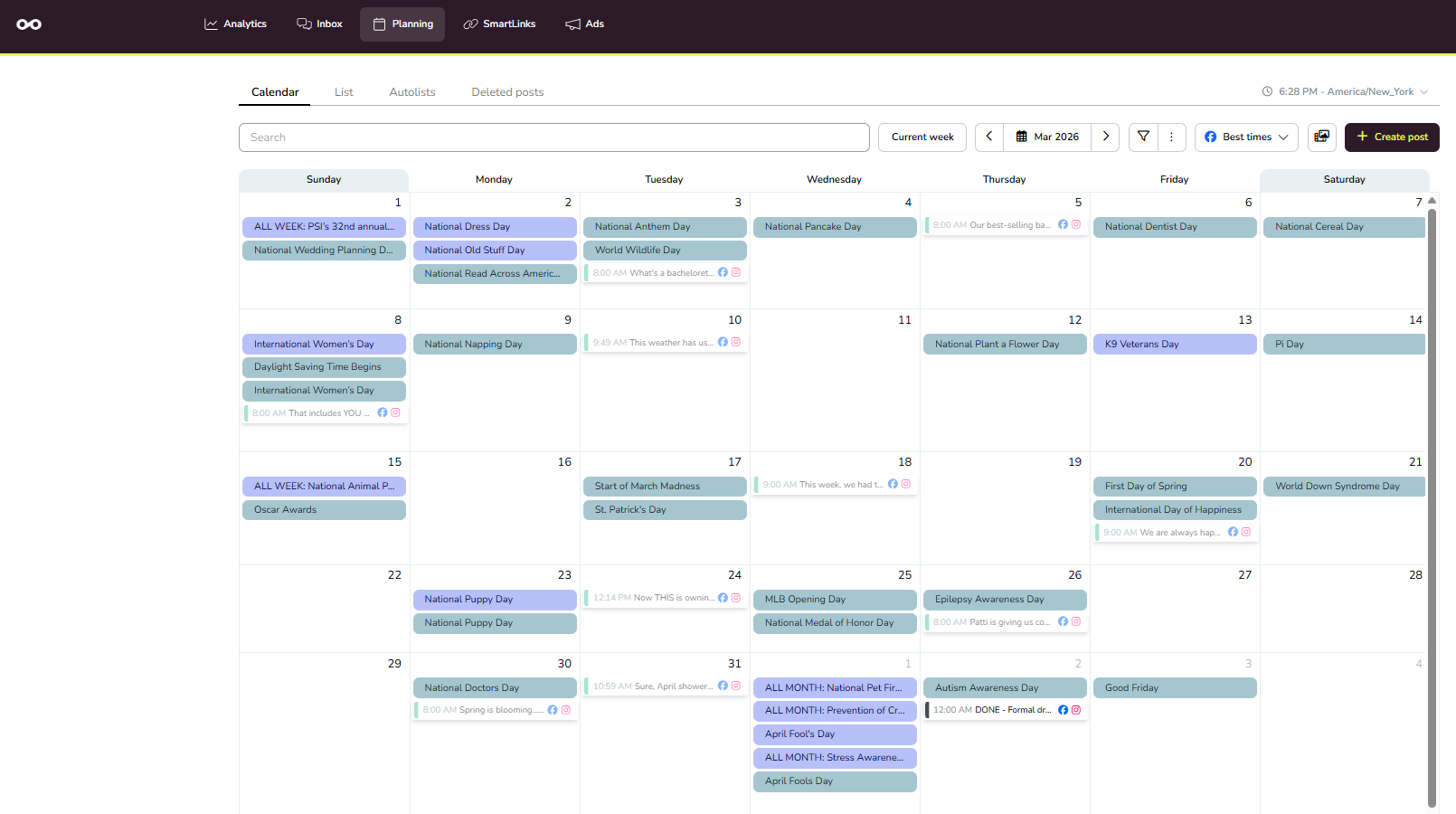
We plan and schedule all of our client content using Metricool. Try it free →
3. Create Content That Earns Shares, Not Just Likes
Likes are vanity. Shares are reach. If your goal is brand awareness, you need content that people want to send to a friend, repost on their story, or save for later.
Shareable content tends to fall into a few reliable buckets: content that teaches something useful, content that makes someone feel seen, content that sparks a reaction, and content that simplifies something complex.
High-shareability content formats:
Carousels that break down a concept step-by-step
Short-form video with a clear hook in the first 3 seconds
Quote graphics that say what your audience is already thinking
Before/after or transformation content
Data-driven posts with a surprising or validating stat
4. Show Up on More Than One Channel — Strategically
Brand awareness is built through repeated exposure. The more places your ideal customer encounters your brand, the faster they remember you. But that doesn't mean you need to be everywhere at once.
The smarter move is to identify where your audience already spends time, show up there consistently, and then expand from a position of strength.
A sustainable multi-channel approach:
Primary channel: Where you go deep (usually Instagram, LinkedIn, or TikTok depending on your audience)
Secondary channel: Where you repurpose your best primary content
Email list: Where you own the relationship (no algorithm dependency)
Blog/SEO: Where you get found by people who are actively searching
5. Use Organic and Paid Content Together — Not in Silos
Here's where many businesses leave visibility on the table: they treat organic content and paid advertising as two separate strategies. They're not. They're two parts of the same funnel.
Your organic content builds trust and warms up your audience. Your paid content amplifies what's already working and puts your brand in front of cold audiences who haven't found you yet. When the two work together, brand awareness scales.
The best-performing paid campaigns are often built on organic content that already proved itself — the posts that got saved, shared, and commented on become the ads.
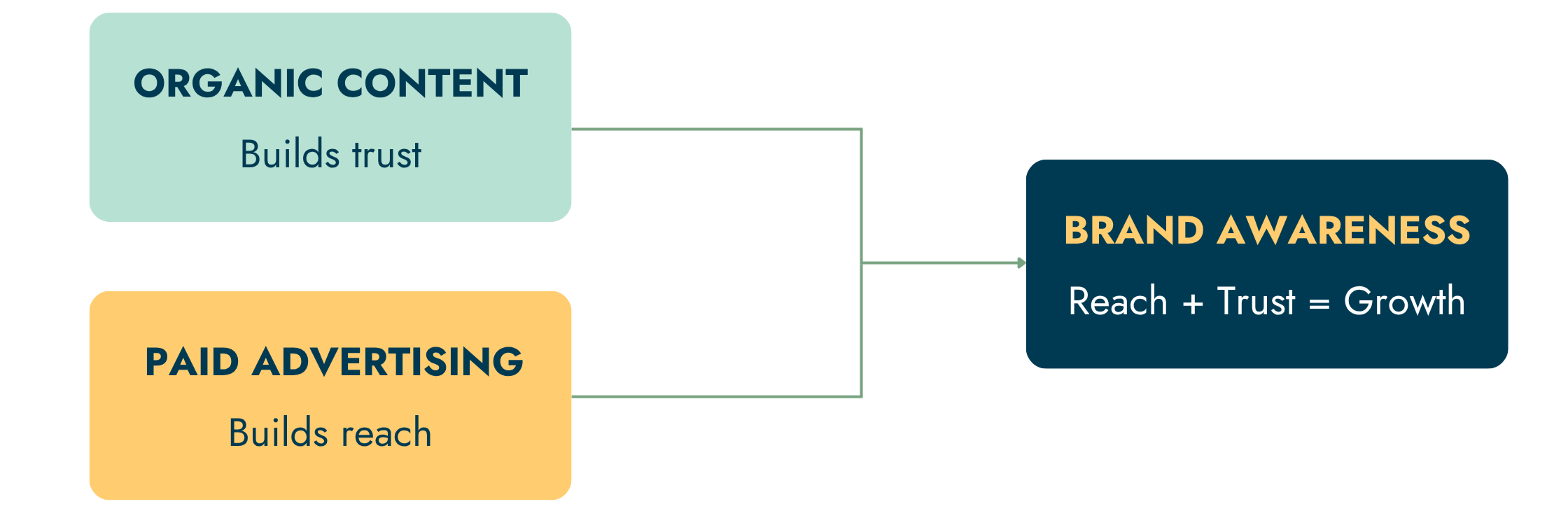
Not sure if your organic and paid efforts are actually working together? That's exactly what Brittany audits in the Stronger Marketing Audit — a live, 60-minute deep dive into your full marketing funnel, starting with the channel that's costing you the most. Book Your Audit →
6. Optimize Every Piece of Content for Discoverability
Great content that no one sees doesn't build awareness. Every piece of content you create should be optimized for discovery — whether that's through hashtags, SEO keywords, alt text, or platform-specific best practices.
Discoverability checklist:
Blog posts: target a specific keyword in the title, H2s, and first paragraph
Instagram: use 5–10 relevant hashtags; write captions with keywords in the first line
LinkedIn: use searchable language in post copy; engage in comments to boost reach
YouTube/Reels/TikTok: front-load keywords in titles and captions; use closed captions
Pinterest: keyword-rich descriptions on every pin
7. Track What's Working and Double Down
The final strategy isn't a content format. It's a habit. The businesses that build real brand awareness online are the ones that review their data, learn what's resonating, and do more of it.
That means checking analytics monthly (at minimum), understanding which content formats drive the most saves and shares, and being willing to kill what isn't working — even if you love it.
What to track for brand awareness:
Reach and impressions (how many people are seeing your content)
Profile visits and follower growth (are people wanting to know more?)
Shares and saves (are people finding it valuable enough to return to?)
Website traffic from social (are people taking action?)
The Real Problem Most Businesses Have
Here's what Brittany Winfield, founder of The Winfield Creative, sees most often when she audits a business's marketing: the content exists, but it's not connected. A brand might be posting consistently on Instagram, running ads sporadically, and sending occasional emails — but none of those pieces know the others exist.
"Marketing is a puzzle," Brittany says. "We help you find the right pieces, rotate them into place, and reveal the bigger picture."
Brand awareness isn't just about creating more content. It's about making sure every piece of content is working as part of a system.
Frequently Asked Questions About Content Creation and Brand Awareness
What types of content are most effective for brand awareness?
Short-form video, educational carousels, and consistent blog content consistently outperform other formats for brand awareness. The key is matching content format to where your audience spends time and what they're likely to share.
How long does it take to build brand awareness through content?
Most businesses start seeing measurable awareness growth — increased reach, profile visits, and organic traffic — within 90 days of consistent, strategic content creation. Significant brand recognition typically builds over 6–12 months.
Do I need to be on every social media platform?
No. It's more effective to go deep on one or two platforms where your ideal audience is active than to spread yourself thin across five. Start with one primary channel, master it, then expand.
How often should I post content to build brand awareness?
Consistency matters more than volume. Three to five times per week on your primary social channel, combined with weekly email and monthly blog content, is a sustainable baseline for most small to mid-size businesses.
What's the difference between brand awareness content and conversion content?
Brand awareness content is designed to reach new people and build recognition — it prioritizes reach and shareability. Conversion content is designed for people who already know you and are deciding whether to buy — it prioritizes trust and action. A healthy content strategy includes both.
Ready to See the Full Picture?
If you've been creating content but aren't sure it's actually building toward anything — a real audience, real leads, real revenue — it might be time to take a step back and look at your full funnel.
The Stronger Marketing Audit is a live, 1-on-1 session with Brittany Winfield that evaluates how your content, ads, and email are performing together. In 60 minutes, you'll walk away knowing exactly what's working, what's not, and what to fix first.